



Orders over US$150 ship free to the United States. No code needed.

I'm Jack, founder of Kipiea Covers. Most people who write to us aren't looking for a textile lecture. They want a straight answer: which fabric should I put on my sofa, grill or mower?
So this guide leads with that decision. Three questions, quick picks by situation, then the material detail underneath — including what denier actually means, why we use polyester Oxford, how 420D vs 600D really differ, and where 900D and 1300D fit if you meet them on a listing. Same facts as our longer fabric pillar; different way in.
Higher denier means thicker, heavier, tougher cloth. It does not mean better waterproofing on its own. At Kipiea, 420D, 500D and 600D share the same double-layer PU coating. You choose weight for toughness and handling, not for a different rain rating.
Three questions that usually settle it
- 1. Sheltered or fully exposed? Under a roof, awning or covered porch, 420D is usually enough. Out in the open — no overhang, open deck, lakeside, rooftop — start at 500D and lean to 600D when wind and snow are serious.
- 2. How hard is the weather where you live? Long Canadian or northern US winters with snow sitting for weeks, strong wind, or a deck that bakes in afternoon sun all point toward 600D for anything left outside. Milder spots and coastal rain (without heavy snow load) can stay at 420D or 500D if the item isn't heavily exposed to wind abrasion.
- 3. How often will you take the cover off? Daily use favours lighter fabric you'll actually bother putting back on. Season-long storage favours heavier fabric that sits firmly and shrugs off more wear.
If those three line up the same way, you already have your answer. If they conflict — say, a huge sectional you uncover every evening on an open, windy deck — bias toward the weather and exposure, or pick the middle weight and make sure the fit and straps are excellent.
Quick picks by situation
- Covered porch / balcony under an overhang / furniture you uncover most evenings: 420D
- Open backyard in a moderate climate — chairs, push or riding mower, AC unit, pool cover: 500D
- Fully exposed deck, lakeside lot, windy rural property, furniture left out all winter: 600D
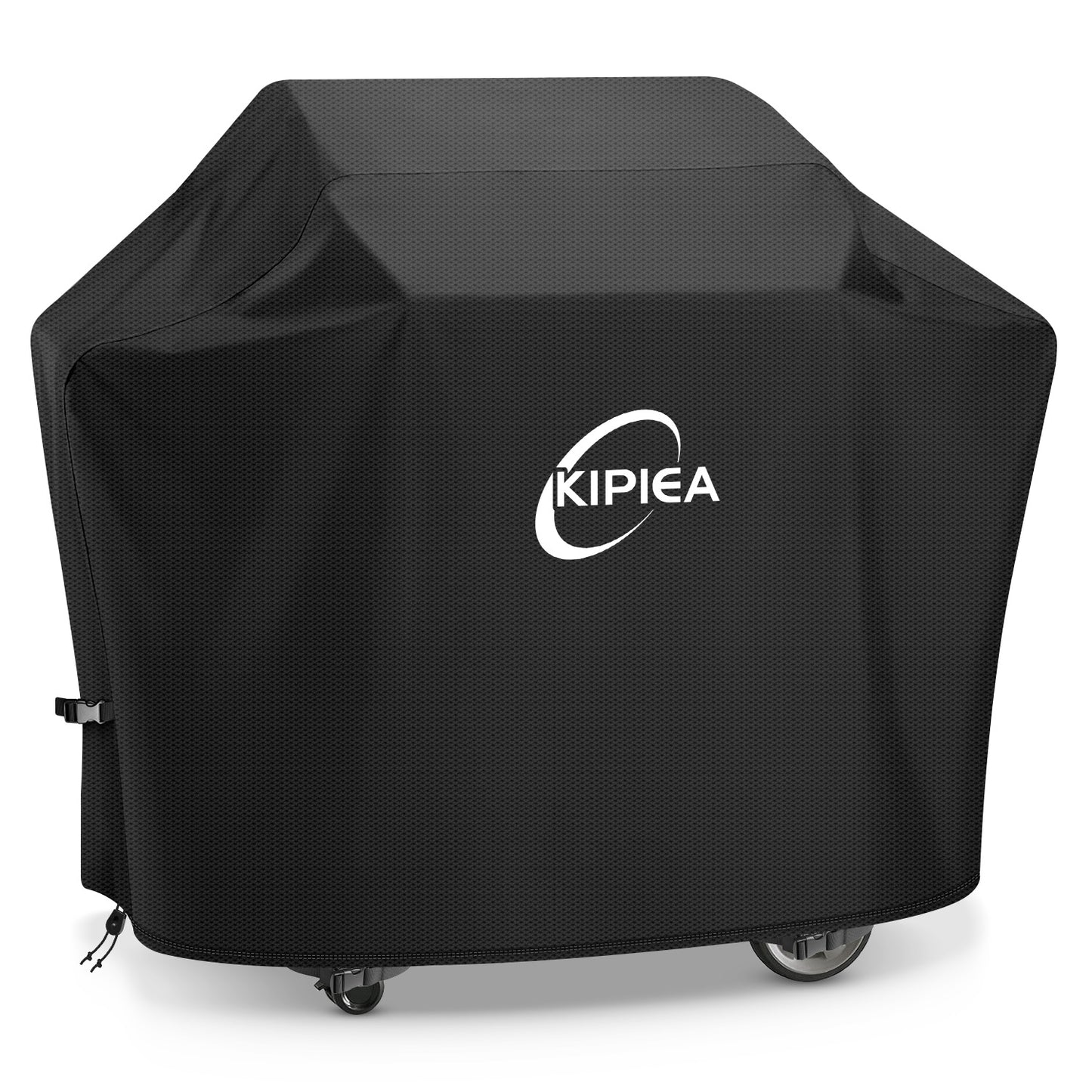
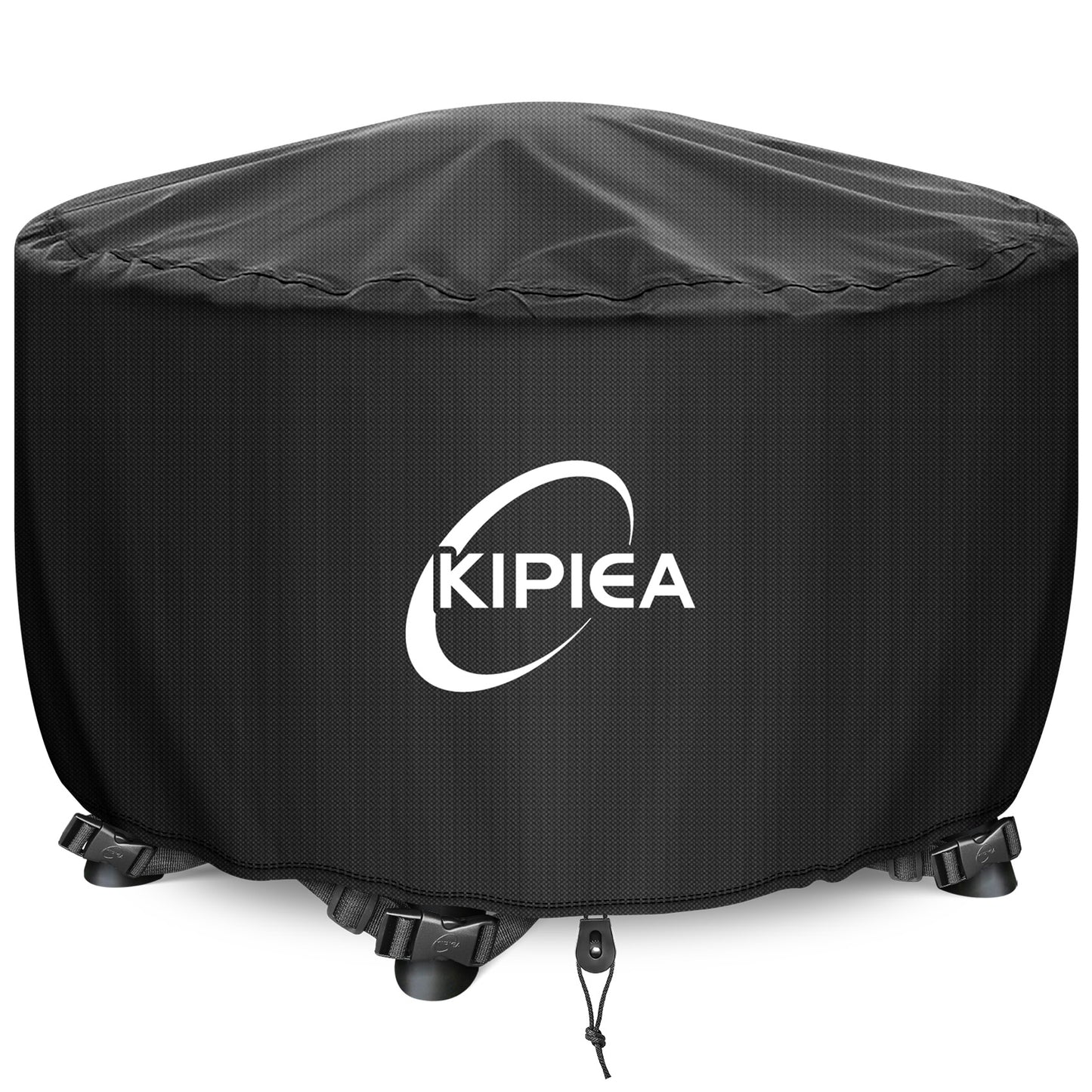
- Grill, smoker, griddle or fire pit: 600D (our dedicated covers in those categories use it)
- Zero-turn mower or snow blower: 600D
- Boat or outboard motor: 1300D
- Saw 900D on a listing and wondering if you "should" upgrade from 600D for a sofa? Usually no — see the 900D note below. For furniture, 600D is already the top of our standard range.
Still measuring? Use the How to Measure guide before you worry about denier. A well-fitted lighter cover beats a baggy heavy one every time.

Quick visual: 420D, 500D and 600D — GSM and best-use at a glance.
At-a-glance: 420D, 500D, 600D, 900D and 1300D
| Fabric | Approx. weight | Best shorthand | Watch-outs |
|---|---|---|---|
| 420D | ~128 GSM | Easiest handling; sheltered or often-uncovered furniture | Less tear/abrasion margin in harsh, exposed sites |
| 500D | ~168 GSM | Everyday all-rounder for gear and many yard items | Not as much winter/wind margin as 600D |
| 600D | ~248 GSM | Heaviest standard pick; exposed decks, grills, hard winters | Heavier to lift and bulkier to store |
| 900D | Between 600D and 1300D | Specialist heavy-duty yarn; tougher than 600D | Usually overkill for patio furniture; check listing if offered |
| 1300D | Specialist marine | Trailering, dock wind, long boat storage | Far too heavy/stiff for day-to-day furniture covers |
Approximate GSM is for our 420D, 500D and 600D fabrics. GSM = grams per square metre.
When a Kipiea product offers more than one Material option, size and fit stay the same — only the fabric weight changes.
What those "D" numbers actually mean
D means denier: the weight in grams of 9,000 metres of yarn. A 600D yarn is heavier and thicker than a 420D yarn over the same length, so the woven cloth is heavier and harder to tear or scuff.
Useful, but incomplete. Denier does not tell you:
- Whether the cover is waterproof (coating + seams do)
- How well it blocks UV (finish and construction do)
- Whether it fits your furniture
- How tightly the cloth is woven
Two "600D" covers from different brands can feel and perform differently if the weave density and coating aren't the same. Compare denier and how the cover is waterproofed.

Polyester Oxford weave under the coating — this is the cloth you are shopping.
Polyester Oxford — the cloth under the coating
Kipiea covers in this guide are woven polyester Oxford. Oxford is a basket-style weave: paired yarns interlaced for a strong, slightly textured cloth that holds shape well without the bulk of heavy canvas.
Why polyester (not vinyl sheet, not "whatever's cheapest")
For outdoor covers, polyester earns its place:
- Low moisture absorption — it doesn't drink rain the way many natural fibres do, so the cover stays lighter when wet and dries more readily.
- Shape when wet — better dimensional stability than fabrics that stretch and sag after a soaking, which helps the cover keep the fit you bought.
- Pairs with coating — the woven cloth is the structure; the PU coating is the waterproof skin. We use a double-layer PU coating rated to withstand over 200,000 Pa of water pressure. Most covers also have taped seams. (Our umbrella cover is coated but not seam-taped — check the listing.)
- Cold-weather behaviour vs cheap PVC sheet — thin vinyl/PVC sheet covers often go brittle and crack after sun and freeze. Woven polyester Oxford stays flexible in a way those sheet covers often don't. That's a practical reason we don't build patio covers from cheap plastic sheet.
- Tear and abrasion — denier and weave govern toughness against hoppers, chair arms and branches. They don't replace a proper coating for rain.
- Recycled content, verified — our covers carry GRS (Global Recycled Standard) certification. That's an independent check on recycled content through the supply chain, not a vague green slogan.
Nylon shows up a lot in packs and technical outdoor gear and can be very strong for its weight. For large covers that sit in sun and weather for months, polyester Oxford with PU coating is the system we design around. Practical fit for the job, not a claim that one fibre wins every comparison forever.
One more shopper-level point: denier describes the yarn; polyester describes the fibre; Oxford describes the weave; PU describes the waterproof skin. Listings that only shout a denier number are leaving out half the story. When you compare covers, look for all four — or at least yarn weight plus how the cloth is waterproofed.
PU vs PVC, in shopper terms
PU-coated woven polyester (what we use) stays relatively flexible and is the waterproof layer on our Oxford cloth. PVC appears on some industrial fabrics; the problem shoppers usually meet is cheap PVC sheet patio covers that crack. Different constructions, same confusing acronym on the internet. For the coating deep-dive, see how our double-layer PU coating works.

Same layer stack across standard weights: Oxford + double-layer PU.
What every standard Kipiea weight shares
Across 420D, 500D and 600D you get the same weatherproofing package: double-layer PU (over 200,000 Pa), taped seams on most covers, UPF 50+ blocking 99.9%+ of UV, buckle straps and drawstring hem on most styles, GRS certification, and a 3-year warranty on Kipiea Covers products bought from Kipiea Covers. You're choosing how tough and how heavy the cloth feels — not a different waterproof rating.
420D, 500D and 600D — matching fabric to the job
420D (~128 GSM) — light and easy to live with
Best when handling matters as much as weather: large furniture under cover, pieces you uncover often, milder exposure. Same coating and UPF as the heavier weights.
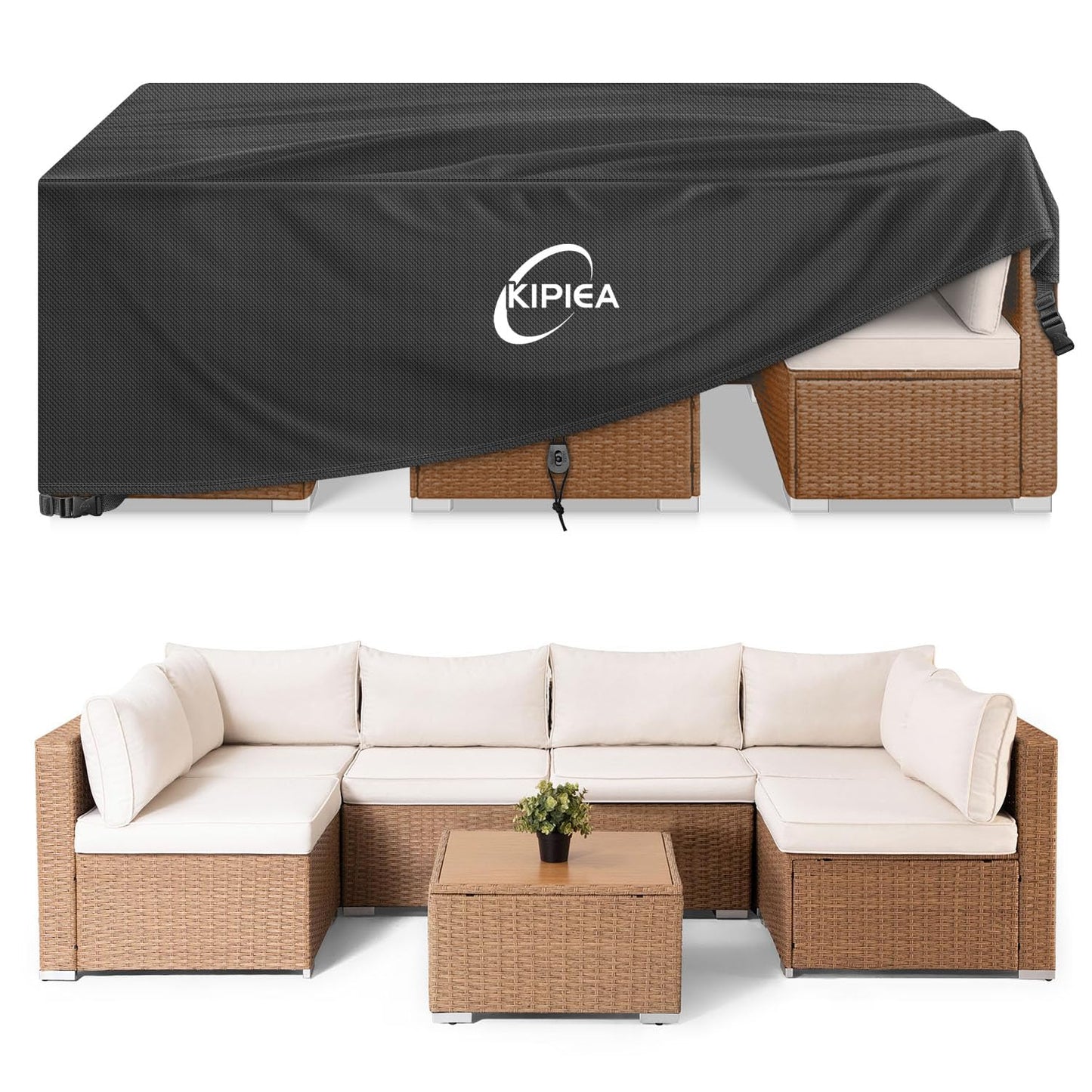
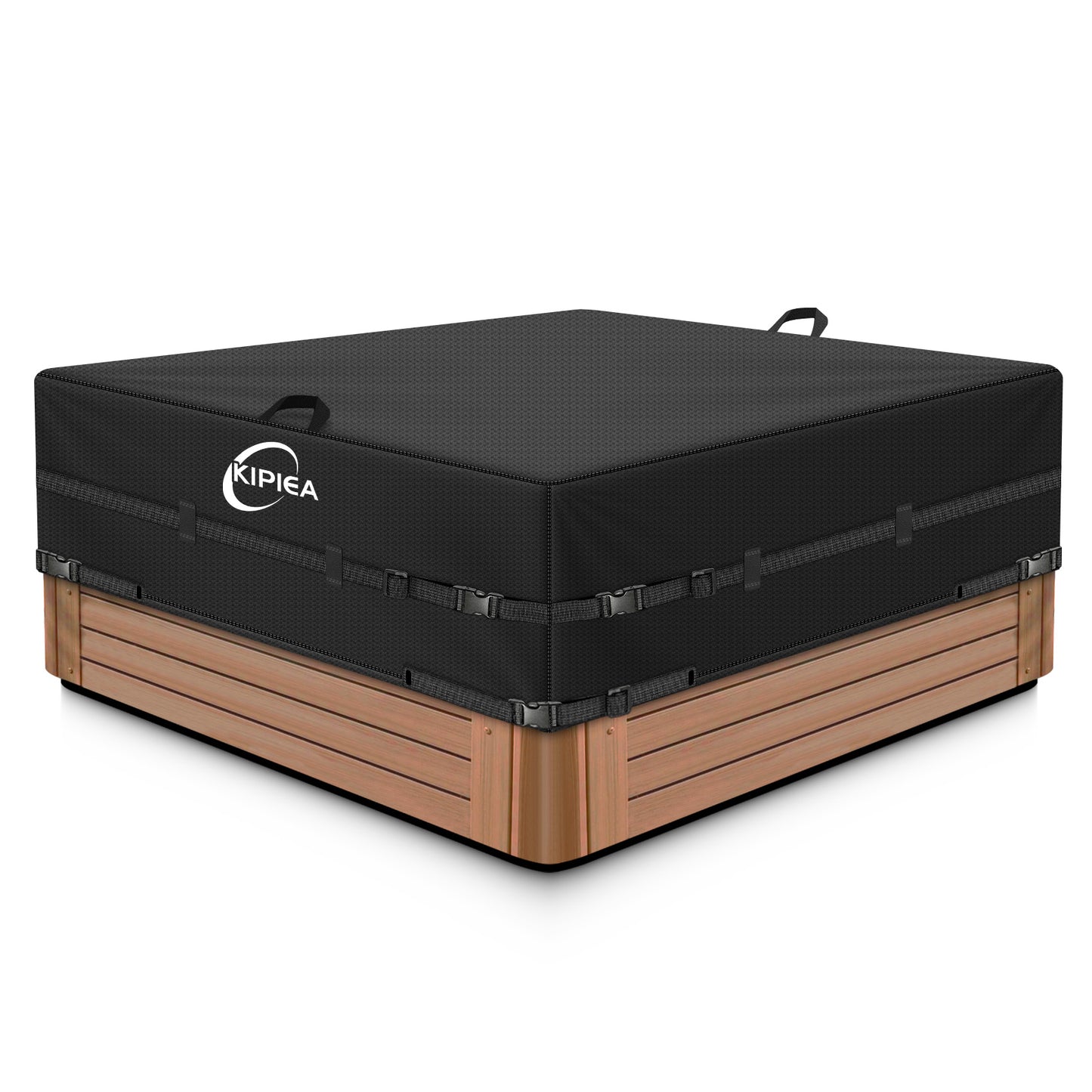
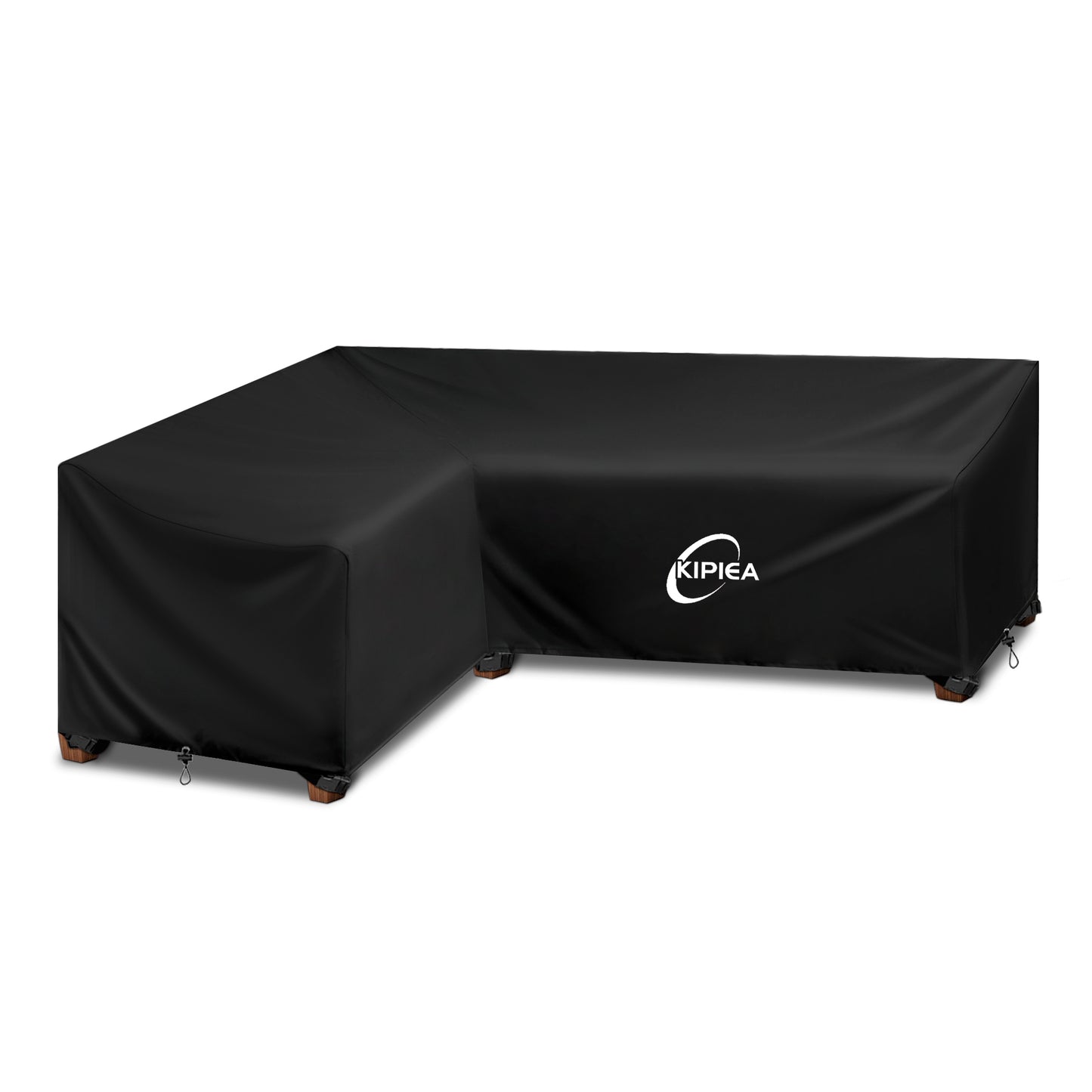
Examples: round patio table cover and patio lounge chair cover in 420D; sofa, sectional, furniture set and hot tub cover protector offered in 420D or 600D — pick 420D when the spot is sheltered or the cover comes off often.
Skip 420D if the item sits fully exposed through hard snow, wind or intense sun for months — step to 500D or 600D.

500D — balanced toughness for most patio furniture.
500D (~168 GSM) — the middle that covers a lot of yards
A clear step up in thickness from 420D, still manageable after a mow or a cook. Strong everyday pick for equipment with corners, wheels and handles.
Examples: push and riding lawn mower covers (riding size 72L × 54W × 46H in / 183 × 137 × 117 cm); above-ground pool cover; AC top and full AC covers; patio chair covers and gas grill cover in 500D or 600D.
AC mesh note: the AC net cover and mesh body of the 2-in-1 AC cover are breathable mesh for debris while the unit runs — not waterproof winter covers. Use a waterproof top or full cover when the unit is idle in rain or snow.

600D hand-feel — thicker weave for harsher climates.
600D (~248 GSM) — heaviest standard fabric
Most tear and abrasion resistance in our everyday range; sits with more authority in wind; the weight we put on dedicated grill, fire pit, zero-turn and snow blower covers, and offer as the tough option on several furniture and grill SKUs.
Examples: Traeger, Pit Boss, Blackstone, Weber kettle and Weber Performer grill covers; round, square and rectangle fire pit covers; zero-turn mower and snow blower covers; patio umbrella cover (coated, not seam-taped); 600D options on sofa, sectional, set, hot tub protector, chairs and BBQ cover.
Trade-off: heavier to fit, bulkier to fold. On a covered porch sofa you strip every evening, you may be carrying toughness you never use.
Higher isn't automatically better
A cover only protects when it's on. If the heavy option is such a chore that it lives in the shed, you've bought the wrong weight. Waterproofing on our standard range doesn't climb with denier — toughness and handling weight do. Fit still beats denier: measure first (How to Measure), then pick 420D, 500D or 600D for the site.
900D and 1300D — when heavier than 600D shows up
900D — honest placement between 600D and 1300D
900D is a heavier yarn than 600D and lighter than 1300D. All else equal, expect a thicker, stiffer, more abrasion-resistant cloth — and a cover that's harder to handle on large furniture.
Shoppers often ask whether 600D or 900D is better. Tougher yarn wins on tear and scuff; it does not automatically win on waterproofing, UV or fit. For patio furniture and most grill covers you handle regularly, 600D is already the top of our standard range. 900D is typically more fabric than a sofa needs. It belongs in specialist outdoor-gear thinking — hard abrasion, rough handling, long idle seasons — not as a default "upgrade" for the patio.
On our side: ready-made covers in this guide run 420D / 500D / 600D, plus 1300D for marine. 900D appears on select / sheet SKUs in planning; we won't invent live product names for it here. If a listing offers 900D, trust that listing. Otherwise, decide among 420D, 500D and 600D using the three questions at the top.
1300D — marine jobs
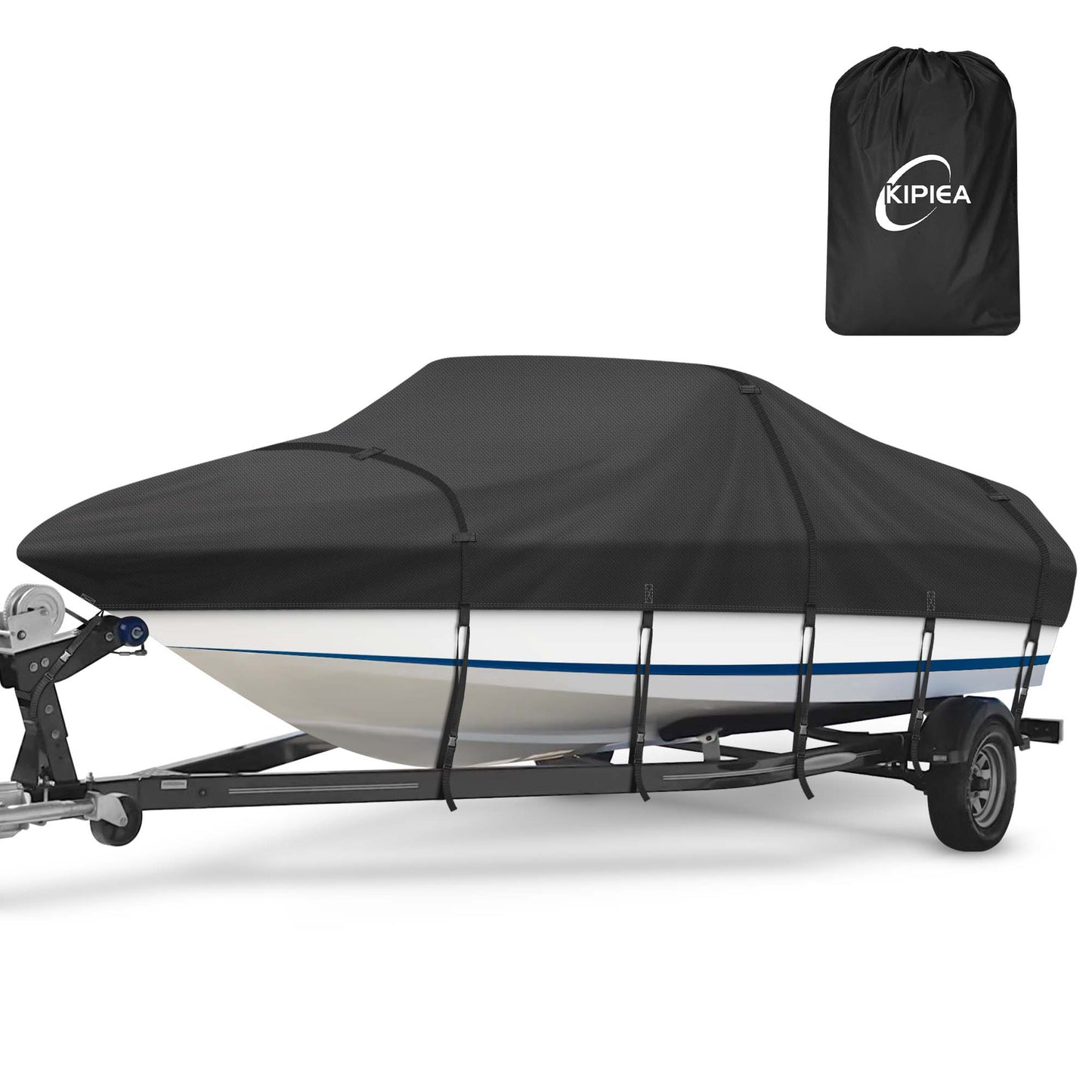
We use 1300D on the trailer boat cover and both outboard / full outboard motor covers: trailering, dock wind, long storage. Putting that weight on a porch sectional would be miserable for no real gain.
Climate in brief (Canada and northern US especially)
Canada is our largest market, so winter gets more than a footnote.
- Snow: Heavier fabric helps; it does not replace brushing snow off. No cover is meant to hold a winter's load. Soft broom only — never shovel or scrape ice on the fabric. Raise flat tops so meltwater runs off. Ice: let it melt. Built-up snow and ice aren't what the warranty is for, so a few minutes with a broom protects the cover and what's under it.
- Freeze-thaw: Melting and refreezing leave ice ridges and puddles on flat lids. An upturned bucket or bundled cushions under the middle helps water shed. Polyester Oxford won't crack like cheap PVC sheet in the cold — still avoid chipping at ice on the fabric.
- UV: UPF 50+ / 99.9%+ block across our weights. For items that stay covered all summer on a baking south- or west-facing deck, favour 600D for toughness over the long haul.
- Rain / coastal: Same waterproof coating across 420D–600D. Choose denier for wind and abrasion, not for "more waterproof." Air covers out on dry days; don't trap damp against cushions or powder-coated frames.
- Wind: Straps, drawstring and correct size beat raw denier. Fasten everything. Heavier cloth has a little more mass, but a loose 600D cover will still sail if you skip the buckles.

Keep the PU finish clean so water keeps beading.
Care that protects any denier
Hose or damp cloth; mild soap and soft brush for stubborn marks; rinse. No machine wash, tumble dry, bleach or iron — they harm coating and taped seams. Dry fully before folding. Cover only when grills, smokers, fire pits and engines are completely cool. Brush off debris and snow; store clean and dry. More in Cover Care & Usage Tips.
Why we offer more than one weight
A chaise under a porch and a snow blower by the garage are different jobs. Polyester Oxford, double-layer PU over 200,000 Pa, UPF 50+, taped seams on most covers, and a choice of denier let you match toughness to the site without changing waterproofing. Custom size covers come in 420D, 500D or 600D with the same package — tell us where the item lives and we'll recommend a weight.
Find covers and next reading
Patio furniture, grill & fire pit, outdoor equipment and boat & marine collections. Short reference: Fabric Guide: 420D vs 500D vs 600D. Furniture buying angles: How to Choose the Right Outdoor Furniture Cover. Or contact us with what you're covering and where it sits.
Frequently asked questions
Which fabric should I choose for my outdoor cover?
Ask: sheltered or exposed? how harsh is winter and wind? how often will you remove it? Sheltered + frequent use → 420D. Typical open-yard gear → 500D. Fully exposed, snowy, windy, or dedicated grill/fire pit/snow blower → 600D. Boat/outboard → 1300D.
What does 600D mean on a cover?
The polyester yarn is 600 denier — grams per 9,000 metres of yarn — so the cloth is thicker and tougher than 420D or 500D. Waterproofing still comes from coating and seams, not from the number alone.
Is 600D better than 420D?
Better for exposure, snow, wind and rough edges. Not better for every porch sofa you uncover nightly. Same Kipiea waterproof coating either way; 600D adds toughness and weight.
Is 600D polyester waterproof?
Not by yarn alone. Kipiea 600D (and 420D / 500D) uses double-layer PU rated over 200,000 Pa, with taped seams on most covers. Check the product page for build details.
Is 600D or 900D better?
900D is a heavier, tougher yarn and a bulkier cover. For furniture and most yard covers, 600D is already our heaviest standard fabric; 900D is specialist territory and usually more than a patio cover needs. Confirm on the listing if 900D is offered; don't treat it as an automatic upgrade.
What is 1300D fabric used for?
At Kipiea: trailer boat and outboard motor covers — trailering, dock wind, long storage. Too heavy for everyday furniture covers.
Why polyester for outdoor covers?
Low moisture uptake, stable when wet, works with PU coating, woven Oxford won't crack like cheap PVC sheet after sun and cold, and recycled content can be GRS-verified. Practical fibre for covers that live outside.
What does GSM mean?
Grams per square metre — finished fabric weight. Ours: about 128 GSM (420D), 168 GSM (500D), 248 GSM (600D).
What fabric is best for outdoor furniture covers in Canada?
Open deck, snow and wind all winter → 600D. Sheltered or mild coastal with little standing snow → 420D or 500D. Brush snow off; raise flat tops so meltwater drains.
Can I get a custom cover in a specific fabric?
Yes — 420D, 500D or 600D with the same PU coating, taped seams and UPF 50+. We reply within 48 hours; tell us the site and we'll recommend a weight.