



Orders over US$150 ship free to the United States. No code needed.

If you've ever shopped for an outdoor cover, you've seen the numbers: 420D, 500D, 600D, sometimes 900D or 1300D. They sit on every listing as if everybody already knows what they mean. Most people don't, and that's fair. Nobody teaches you yarn weights at school.
I'm Jack, founder of Kipiea Covers, and this is the guide I wish every customer could read before they order. It explains what the "D" actually means, why our covers are woven polyester Oxford rather than vinyl sheet, how 420D vs 600D (and 500D in between) really compare, where 900D and 1300D sit in the picture, and how to pick the right fabric for your furniture, grill or gear — including long Canadian winters, hot summer sun and everything in between.
The short version: higher denier means a thicker, heavier, tougher fabric, but higher isn't always better. The right choice depends on where your item lives and how often you use it. Waterproofing and UV protection at Kipiea come from the coating and finish, not from the denier number alone.

Real Kipiea Oxford weave — denier is the yarn thickness, not the whole story.
What does "D" mean? Denier explained
D stands for denier, a unit that measures how thick and heavy a yarn is. Technically, denier is the weight in grams of 9,000 metres of a single yarn. A 600 denier yarn weighs twice as much over the same length as a 300 denier yarn, so it's thicker and stronger.
When a fabric is called "600D polyester", the polyester yarn it's woven from is 600 denier. Thicker yarn makes a fabric that is:
- Heavier, so it sits more firmly and is less likely to flap in the wind
- More tear- and abrasion-resistant, so it handles snags, branches and rough edges better
- Stiffer and bulkier, so it takes more effort to put on and folds up larger
You'll also see denier written on bags, luggage, tents and boat covers. The principle is the same wherever you meet it: the number describes the yarn, not the waterproofing, the coating or the fit of the finished product.
What denier does not tell you
This is where a lot of shoppers get caught out. Denier measures the yarn, not the whole cover. It tells you nothing about:
- Waterproofing. Polyester yarn isn't waterproof on its own, whatever the denier. Water resistance comes from the coating and the seams.
- Sun protection. UV resistance depends on how the fabric is made and finished, not on the denier number alone.
- Fit. A heavy fabric on a cover that's the wrong size will still catch the wind and let rain in.
- Weave density. Two fabrics with the same denier can feel quite different depending on how tightly they're woven and how they're coated.
So treat denier as one important number, not the whole story. The rest of this guide covers what that story looks like for outdoor covers — and specifically for Kipiea.
What is Oxford fabric?
Every Kipiea Covers cover in this guide is made from polyester Oxford fabric. "Oxford" describes the weave: a basket-style weave that interlaces paired yarns, giving a strong, slightly textured cloth that holds its shape well. Woven in polyester and coated, it's one of the most popular fabrics for outdoor covers, bags and gear because it's tough without being as heavy as traditional canvas.
You'll sometimes see Oxford fabric described with two numbers (for example 600×600D). That usually means both the warp and the weft yarns are the same denier. In everyday shopping, a label that simply says "600D Oxford" is referring to that same family of woven polyester cloth.
Oxford weave matters for covers because the basket structure spreads stress across paired yarns. That helps the fabric resist tearing when a corner, hopper lip or branch catches it — which is exactly the kind of everyday abuse outdoor covers take.
Why polyester for outdoor covers
The yarn behind every Kipiea Oxford cover is polyester. That isn't a throwaway detail. For outdoor covers, polyester is a practical choice for several reasons that show up season after season.
Low moisture absorption
Polyester takes up very little water compared with many natural fibres. A cover that doesn't drink in rain stays lighter when wet, dries faster when you air it out, and is less likely to stretch or sag after a storm. For something that may sit outside for months at a time, that behaviour matters more than it does for a jacket you hang up after one wet day.
Dimensional stability when wet
Some fabrics stretch when they're soaked and then don't recover cleanly. Polyester holds its shape better when wet. On a cover, that means the fit you measured for is more likely to stay the fit you get after rain and freeze-thaw, rather than a baggy, wind-catching skin.
UV behaviour and a practical note on nylon
Both polyester and nylon are used in outdoor gear. At a shopper level, the useful points are these: polyester generally holds up well in prolonged sun once it's properly finished, and it doesn't absorb as much moisture as nylon. Nylon can be very strong for its weight and is common in packs and technical gear, but for large outdoor covers that sit in sun and rain for months, polyester Oxford with a proper coating is the fabric we build around. We don't claim polyester wins every fibre comparison in every use case — we claim it's the right fibre for this job.
Won't crack like cheap PVC or vinyl sheet covers
Thin plastic or vinyl sheet covers often look neat on day one and then go brittle. A few seasons of sun and cold, and they crack at the folds and corners. Woven polyester Oxford won't behave that way. The cloth stays flexible in the cold in a way cheap sheet PVC often doesn't, which is one of the big reasons we use it for Canadian and northern US winters.
Tear resistance vs abrasion
Denier and weave mainly affect how the fabric handles tears and abrasion — snags on grill hoppers, chair arms, mower handles, dock hardware. A higher-denier Oxford shrugs off that kind of wear better. It does not, by itself, make the cover more waterproof. That job belongs to the coating and the seams.
The coating partnership
Think of the woven polyester as the structure and the PU coating as the waterproof skin. Neither does the other's job. A thick yarn with a poor coating still wets through; a great coating on a flimsy, loosely woven cloth still tears. We pair Oxford polyester with a double-layer PU coating so toughness and waterproofing each come from the part of the build that should provide them.
Recyclability and GRS, without the greenwash
Polyester can be recycled, and Kipiea covers carry GRS (Global Recycled Standard) certification, which independently verifies recycled content through the supply chain. That's a real, audited standard — not a vague "eco" badge we invented. It doesn't mean a cover lasts forever or that buying one solves climate change. It does mean the recycled content claim is independently checked, which is the level of honesty we prefer.

Oxford cloth plus double-layer PU — waterproofing lives in the coating.
PU coating vs PVC coating (what matters when you're shopping)
If you've compared outdoor covers, you've probably seen both PU-coated and PVC-coated polyester. Here's the practical difference for a shopper, without the chemistry lecture.
PU (polyurethane) coating is what we use. Applied to the woven fabric, it creates a flexible waterproof barrier. Our covers use a double-layer PU coating rated to withstand over 200,000 Pa of water pressure. That rating is about the fabric's ability to hold water pressure; taped seams (on most of our covers) then stop water creeping through needle holes. PU stays relatively flexible in cold weather, which matters when a cover has to flex around furniture in a Canadian winter rather than crack at the fold.
PVC (polyvinyl chloride) coating is common on some heavy industrial and marine fabrics. It can be very waterproof and durable in the right constructions, but cheap PVC sheet covers — the thin, plasticky kind sold as patio covers — are a different animal. Those are the ones that go brittle, crack and split. When people say "my last cover cracked after two winters," they're usually talking about that thin sheet style, not a properly woven, coated Oxford cloth.
For patio furniture, grills and yard equipment, we build around woven polyester Oxford with double-layer PU. If you want the full coating story, read our guide to how double-layer PU coating works.
One more practical point: denier and coating are separate choices. A 600D fabric with a weak coating can wet through; a 420D fabric with a strong coating and taped seams can stay dry. Always read both the fabric weight and how the cover is waterproofed.

Water beads on the PU finish — coating, not denier alone, drives waterproofing.
What every Kipiea fabric has in common
Whether you choose 420D, 500D or 600D, the weatherproofing package is the same. The difference between them is toughness and weight. Here's what our standard covers share:
- Double-layer PU coating, rated to withstand over 200,000 Pa of water pressure. This is what makes the fabric waterproof. Full detail in our double-layer PU coating guide.
- Taped seams on most covers. Waterproof tape over the stitching stops water creeping through the needle holes. A few products, such as our umbrella cover, are coated but not seam-taped, so check the listing for the exact build.
- UPF 50+ sun protection that blocks 99.9%+ of UV rays, helping prevent fading and sun damage to what's underneath.
- Tear-resistant woven Oxford polyester, not thin plastic sheet.
- Adjustable buckle straps and a drawstring hem with lock toggles on most covers, to keep them snug on windy days.
- GRS (Global Recycled Standard) certification, which independently verifies recycled content through the supply chain.
- A 3-year warranty against material and craftsmanship defects on Kipiea Covers products bought from Kipiea Covers.
When one of our products comes in more than one fabric, the size and fit stay exactly the same. Only the fabric weight changes.

420D (~128 GSM) · 500D (~168 GSM) · 600D (~248 GSM) at a glance.
420D vs 500D vs 600D vs 900D vs 1300D: comparison table
| Fabric | Approx. fabric weight | How it feels | Strengths | Trade-offs | Best for |
|---|---|---|---|---|---|
| 420D | approx. 128 GSM | Lightest and most flexible | Quick to put on and take off, folds away small, easy to handle on big covers | Less tear and abrasion resistance than heavier fabrics | Covered patios and porches, milder climates, furniture you uncover often |
| 500D | approx. 168 GSM | Noticeably thicker but still easy to handle | A balance of toughness and convenience | Heavier than 420D, less margin than 600D in the harshest spots | Grills, chairs, mowers, pools and AC units outside all year in typical Canadian and US weather |
| 600D | approx. 248 GSM | Our heaviest standard fabric, thick and sturdy | Most tear-resistant of our standard fabrics, sits firmly in wind, most margin for snow and sun | Heaviest of the everyday options to handle, bulkier to fold and store | Fully exposed decks, lakeside and windy spots, long snowy winters, big-ticket items |
| 900D | Heavier than 600D (between 600D and 1300D) | Thick, stiff, heavy-duty | Extra tear and abrasion margin for specialised outdoor gear | Overkill for most patio furniture; bulkier and harder to handle day to day | Specialist / select outdoor gear where abrasion and rough handling are the main risks — see the 900D section below |
| 1300D | Heavier again (specialist) | Dense and heavy-duty | Built for trailering, dock-side wind and long storage seasons | Much heavier and bulkier; overkill for furniture | Boats and outboard motors |
GSM = grams per square metre, the weight of the finished fabric. Approximate GSM figures above are for our 420D, 500D and 600D fabrics.
420D Oxford fabric: light, flexible and easy to live with
420D is our lightest fabric (approx. 128 GSM). Don't mistake light for flimsy. It's still woven polyester Oxford with the same double-layer PU coating and UPF 50+ protection as our heavier fabrics.
Why choose 420D
- It's the easiest to handle. On a big sectional or a full patio set, a lighter cover is much easier to throw on and pull off, especially if you're doing it alone.
- It packs small. It folds up neatly when it's off for a summer evening or stored for the season.
- It suits sheltered spots. Under a roof, an awning or a covered porch, the item isn't taking the full force of the weather, so you don't need the extra bulk.
When 420D isn't the right call
If the item sits fully exposed through months of snow, gusty wind or intense summer sun, step up to 500D or 600D. Lighter fabric has less margin against tears and abrasion when conditions are harsh.
Kipiea covers made in 420D
- Round patio table cover: made in 420D, a practical weight for a large round cover you'll handle often.
- Patio lounge chair cover: made in 420D, so it's easy to slip on and off a chaise lounge between pool days.
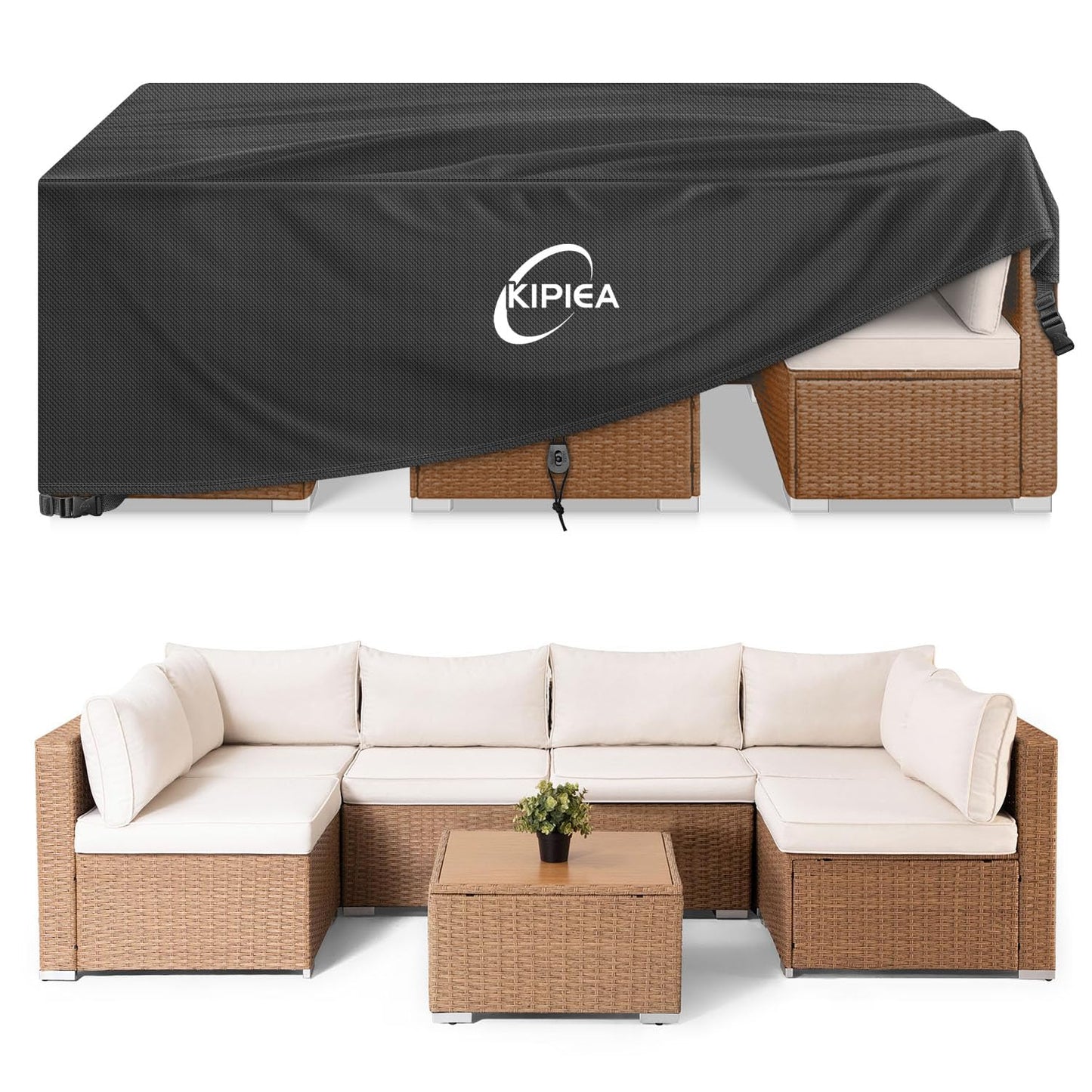
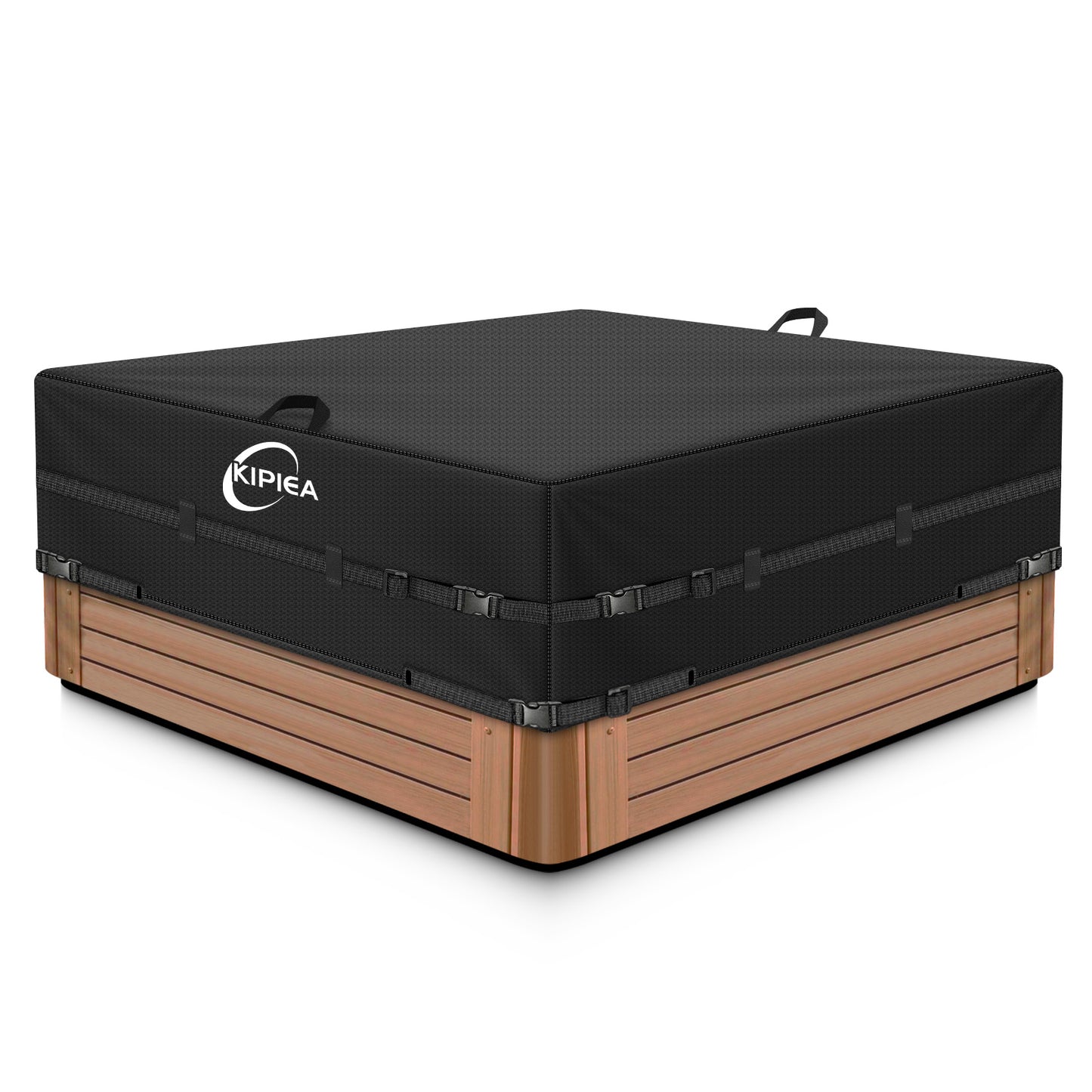
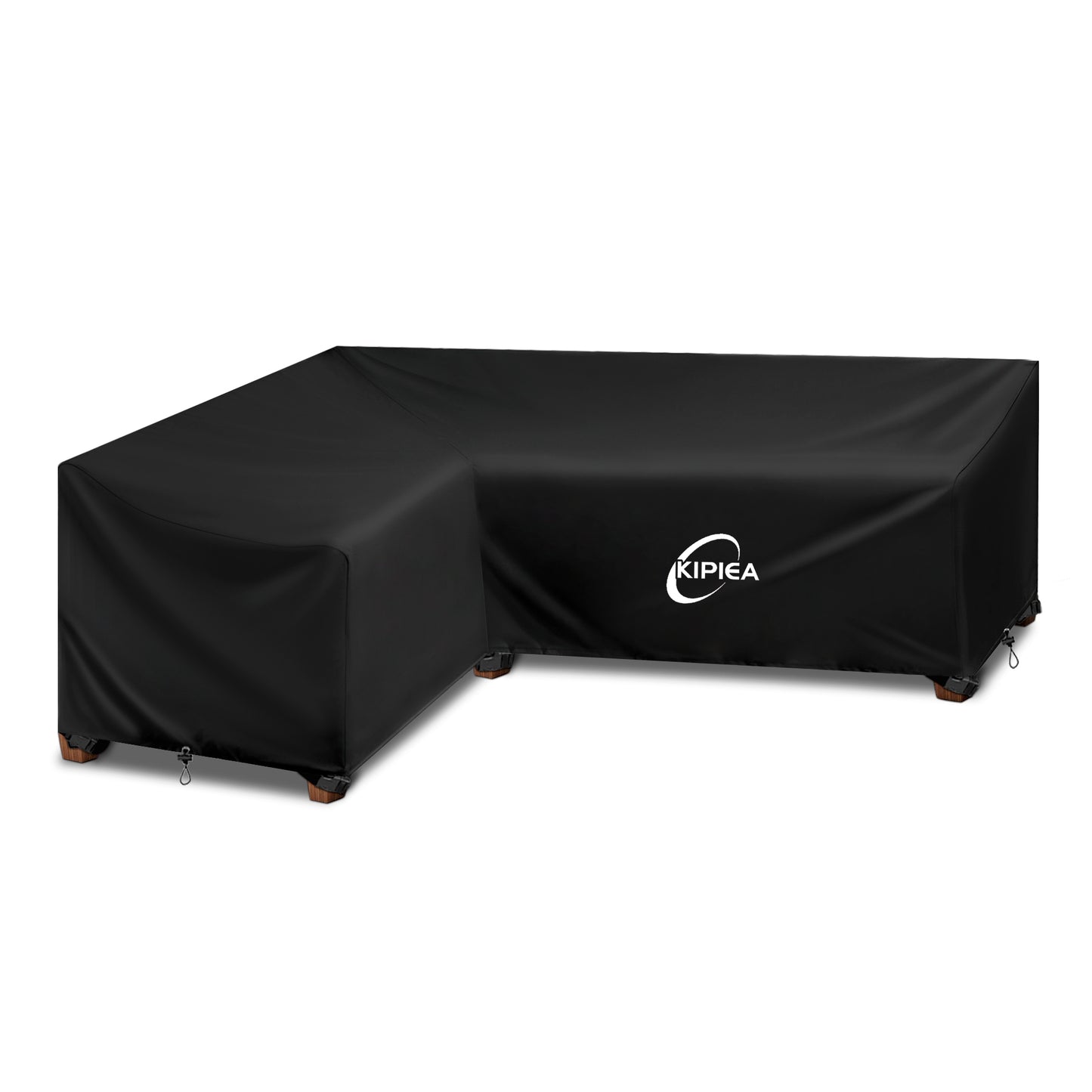
- Patio sofa cover, patio sectional sofa cover, patio furniture set cover and hot tub cover protector: choose 420D or 600D. 420D is the lighter option for sheltered or often-used furniture.

500D ripstop Oxford — the all-rounder most patio covers use.
500D Oxford fabric: the all-rounder
500D (approx. 168 GSM) is a noticeable step up in thickness from 420D while still being easy to put on and take off. For a lot of items that live outside all year in typical Canadian and US weather, it's the sweet spot.
Why choose 500D
- Balanced toughness. It has more resistance to snags and scuffs than 420D, which matters on items with corners, handles, wheels or side shelves.
- Easy to handle. It's light enough that you'll actually use it after every cut, cook or swim.
- Ideal for mid-size equipment. Mowers, grills, chairs and AC units don't need the bulk of 600D in most yards.
Kipiea covers made in 500D
- Push lawn mower cover and riding lawn mower cover: 500D handles wheels, handles and engine edges without being a chore to pull on after every mow. The riding cover is sized 72L × 54W × 46H in (183 × 137 × 117 cm).
- Above-ground pool cover: 500D keeps a very large cover manageable to spread out and fold away.
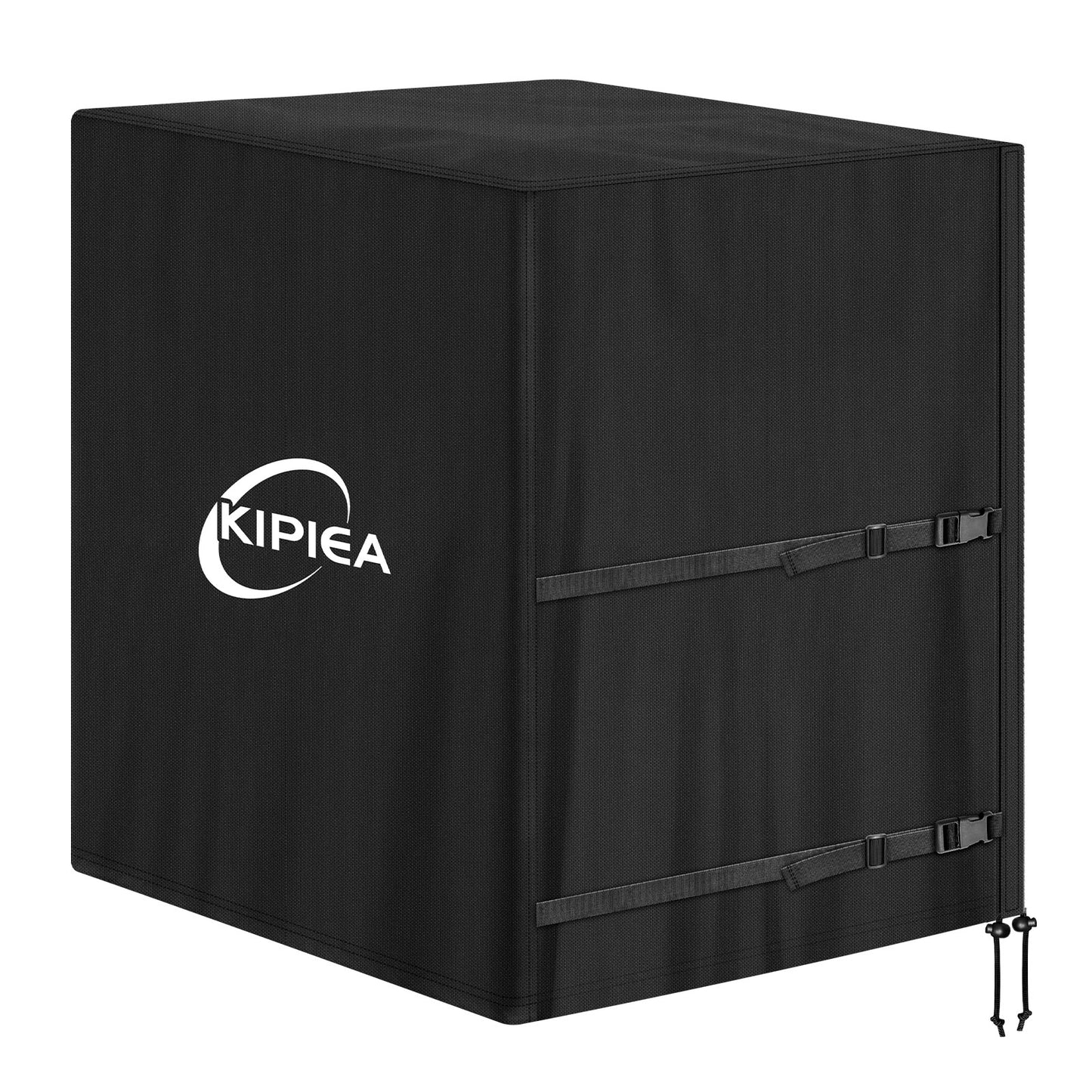
- Outdoor AC unit top cover and full outdoor AC unit cover: 500D keeps rain, snow, leaves and debris off your condenser through the off-season.
- Patio chair covers and BBQ grill cover for gas grills: choose 500D or 600D. 500D is a great everyday pick, and 600D is there when your grill or chairs sit on a fully exposed deck.
A note on AC covers: our AC net cover and the mesh body of our 2-in-1 AC cover are breathable mesh, not waterproof fabric. They're meant to keep leaves and fluff out while the unit is running. For rain and snow while it's idle, use a waterproof top or full cover.

Heavier Oxford hand-feel with reinforced seam stitching.
600D polyester: our heaviest standard fabric
600D Oxford (approx. 248 GSM) is the thickest, sturdiest and most tear-resistant fabric in our standard range. It's what we use on our grill and fire pit covers, the yard machines that take the most abuse, and anything that sits fully exposed through long, hard winters. When people search for 600D polyester or 600D Oxford fabric, this is the weight they're usually weighing up against lighter options.
Why choose 600D
- Maximum tear and abrasion resistance of our standard fabrics. It handles branches, rough grill edges, chimneys and hoppers.
- It stays put. Heavier fabric is less inclined to flap and lift in strong wind, especially with the buckles fastened.
- More margin for long winters and long, sunny summers on open decks and lakeside lots.
- Peace of mind on big-ticket items. If you've spent serious money on a grill, sectional or hot tub, many customers choose the heavier fabric for that extra margin.
The honest trade-offs
600D is heavier to lift, takes a little more effort to fit, and folds up bulkier. If you uncover your sofa every evening on a covered porch, it may be more cover than you need. Waterproofing is the same as 420D and 500D — you're paying for toughness and handling weight, not for a different rain rating.
Kipiea covers made in 600D
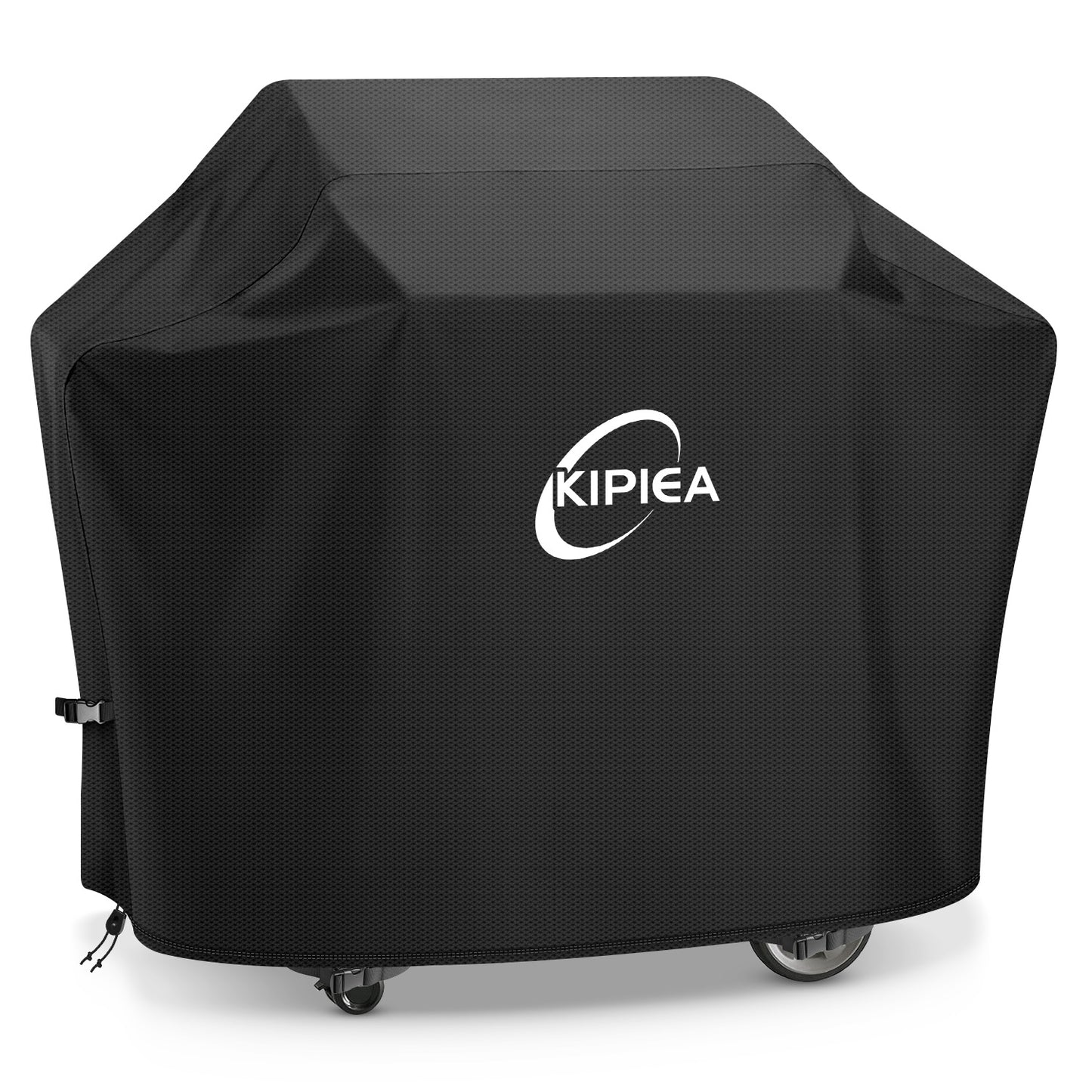
- Grills: pellet grill cover for Traeger grills, pellet grill cover for Pit Boss grills and smokers, griddle cover for Blackstone griddles, grill cover for Weber charcoal kettle grills and grill cover for Weber Performer charcoal grills. Grills have hoppers, chimneys, side shelves and handles that wear through lighter fabric, so 600D makes sense. Always let the grill cool fully before covering.
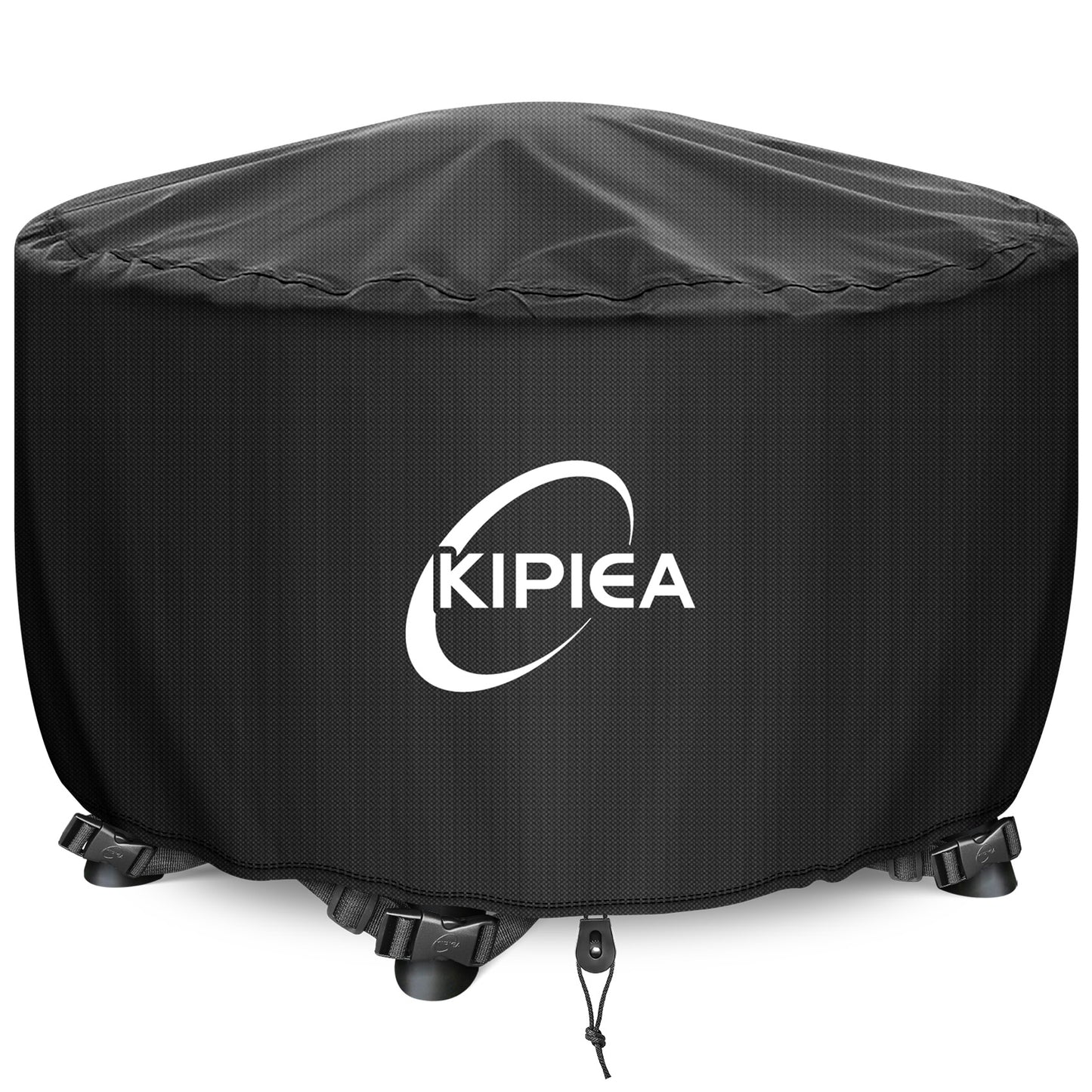
- Fire pits: round fire pit cover, square fire pit cover and rectangle fire pit cover. Fire pits usually sit out in the open, taking rain, snow and strong sun.
- Yard machines: zero turn mower cover and snow blower cover (fits most 20–28 in / 51–71 cm snow throwers). A snow blower lives with meltwater, grit and freezing nights all winter, which is exactly what heavy fabric is for.
- Umbrellas: patio umbrella cover. A tall, narrow cover takes a lot of wind, and 600D holds up better to snags and abrasion. (This one is coated but not seam-taped.)
- Choose 600D as an option on: the patio sofa cover, sectional sofa cover, furniture set cover, hot tub cover protector, patio chair covers and BBQ grill cover.
900D: where it sits, and when it's more than you need
You'll see 900D on fabric mill pages, bag makers and some outdoor gear listings, and it shows up as a search comparison against 600D for good reason. People want to know: if 600D is tough, isn't 900D tougher — and therefore better?
Material science first. 900D means the yarn is 900 denier — heavier than 600D and lighter than 1300D. All else equal (same fibre, similar weave density, similar coating), a 900D cloth will be thicker, stiffer and more resistant to tearing and abrasion than 600D, and less extreme than 1300D. It sits in the "heavy-duty specialist" band: serious toughness, with the handling cost that comes with it.
What 900D does not automatically buy you:
- Extra waterproofing (still a coating-and-seams job)
- Better UV protection by denier alone
- A better fit
- A cover you'll enjoy putting on every evening
When 900D is overkill for furniture. For patio sofas, sectionals, chairs, tables and most grill covers that you handle regularly, 600D is already our heaviest standard fabric and is what we design those products around. Jumping to 900D on a sofa cover would make a large cover heavier and stiffer without changing how waterproof it is. You'd feel that every time you took it off for dinner on the deck. For furniture, higher isn't a free upgrade — it's a handling penalty for toughness you may never use.
Where 900D makes more sense in principle. Specialist outdoor gear that takes hard abrasion, rough handling or long idle seasons in harsh weather can justify yarn heavier than 600D. Think of the same logic that pushes boat covers to 1300D: the job is harder than a porch sofa. 900D is a step on that ladder, not a magic "best" label.
How Kipiea talks about 900D honestly. Our ready-made patio, grill, fire pit and equipment covers in this guide are built in 420D, 500D, 600D and, for marine, 1300D. 900D appears on select / sheet SKUs in our range planning; we are not going to invent a list of live product pages that use it. If a specific Kipiea listing offers 900D, that listing is the source of truth — check the product page. For everyday patio and yard covers, start with the 420D / 500D / 600D choice and only look heavier when the job clearly calls for it.
600D vs 900D, in one line: 900D is tougher and heavier; for most furniture and grill covers, 600D already sits at the top of our standard range, and 900D is specialist territory rather than a default upgrade.
1300D: when a cover has to work as hard as a boat does
Beyond our standard range, we use 1300D Oxford where the job really calls for it. It's a much heavier yarn than 600D (and heavier again than 900D), with the same double-layer PU coating (over 200,000 Pa) and UPF 50+ protection.
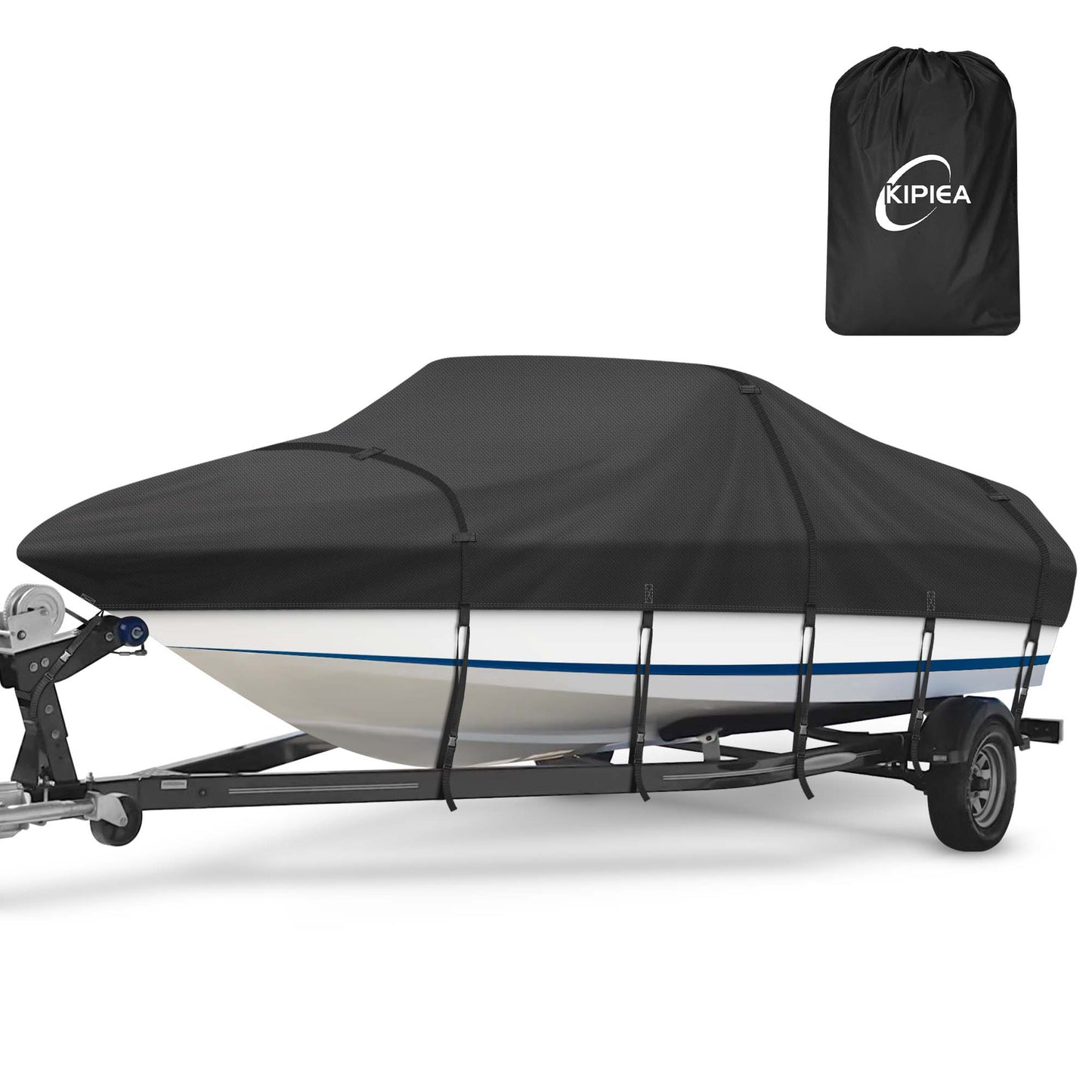
- Trailer boat cover: a boat cover has to survive trailering, wind at the dock and long storage seasons.
- Outboard motor cover and full outboard motor cover: the cowling is an expensive, exposed part of the boat, and these covers stay on while the boat sits or trails.
Why not use 1300D on everything? Because it would make a patio cover heavy, stiff and awkward, with no real benefit on a sofa under an awning. Heavier fabric is a tool for specific jobs, not a badge of quality.
Higher denier isn't always better: the honest trade-offs
It's tempting to assume the biggest number wins. In practice, the "best" fabric is the one that matches how and where you'll use the cover:
- Weight and handling. A heavy cover on a large sectional or pool is harder to fit and remove. If it's a chore, it ends up left in the shed. A cover only protects when it's on.
- Storage. Heavier fabric folds bulkier, which matters if you take covers off every evening.
- Cost. Heavier fabric costs more to make. On a sheltered item, you'd pay for toughness you never use.
- Waterproofing is the same across our standard weights. Our 420D, 500D and 600D fabrics share the same double-layer PU coating. Going heavier adds toughness, not extra waterproofing.
- Fit matters more than denier. A well-fitted cover in a lighter fabric will beat a baggy, heavier one that the wind gets under. Start with our How to Measure guide.
Which fabric should I choose? A decision guide by use and climate
Start with three questions
- 1. Is the item sheltered or exposed? If it's under a roof, awning or covered porch, 420D is usually plenty. If it's out in the open, choose 500D or 600D.
- 2. How harsh is your weather? If snow will sit on the cover for months, or strong winds are common, 600D gives you the most margin in our standard range.
- 3. How often will you take it off? If you use the item daily, lighter fabric is easier to live with. If it's covered for the whole season, heavier fabric stays put and shrugs off more wear.
Quick picks by situation
- Covered porch, sunroom-adjacent patio or balcony under an overhang: 420D
- Open backyard deck in a moderate climate: 500D for grills, chairs and equipment; 420D or 600D for furniture depending on how exposed it is
- Fully exposed deck, lakeside lot, rooftop or windy rural property: 600D
- Long snowy winter with furniture left outside: 600D
- Grill, smoker, griddle or fire pit: 600D (that's what our dedicated grill and fire pit covers use)
- Mower: 500D for push and riding mowers; 600D for zero-turns
- Snow blower: 600D
- Boat or outboard motor: 1300D
Winter in Canada and the northern US: snow load and freeze-thaw
Canada is home to a lot of our customers, and winter is the toughest test any cover faces.
- Snow load. Snow is heavy, and wet spring snow is heavier still. It stretches fabric and strains seams. Heavier fabric gives you more margin, but no cover is designed to carry a winter's worth of snow. Brush it off regularly with a soft broom, and never use a shovel or ice scraper on the fabric. Snow and ice left to build up isn't covered by the warranty, so a few minutes with a broom protects both the cover and your item.
- Freeze-thaw cycles. Melting and refreezing creates ice ridges and pools of meltwater. Raise the middle of flat-topped covers (an upturned bucket or bundled cushions works) so water and snow slide off rather than collecting. If ice forms, let it melt rather than chipping at it.
- Cold. Woven Oxford polyester won't go brittle and crack the way thin PVC covers tend to. That's one of the big reasons we use it.
- Winter wind. Fasten every buckle and pull the drawstring tight around the base. A cover that fits properly is much harder for the wind to lift.
Strong summer sun and UV
Our fabrics are UPF 50+ and block 99.9%+ of UV rays, whatever the denier. On a south- or west-facing deck that bakes all afternoon, a heavier fabric adds toughness for the long haul, so lean towards 600D for items that stay covered all summer.
Rain-heavy and coastal climates
All three standard fabrics share the same over-200,000 Pa waterproof coating, so in a wet climate your choice of denier depends on wind and exposure, not rain. The bigger risks are pooling water and trapped damp. Raise the middle of the cover, keep vents clear, and on a dry day take the cover off so the item and the inside of the cover can air out.
Wind
Wind lifts covers that are loose, oversized or unfastened. Heavier fabric helps a little because it has more mass, but fit and straps matter more. Measure carefully, use the buckles and drawstring, and don't buy "one size up just in case" unless the size chart says you should.
Why Kipiea uses these fabrics
We could make covers out of one fabric and call it a day. We don't, because a lounge chair on a covered porch and a snow blower beside the garage simply don't need the same thing. Offering 420D, 500D and 600D (and 1300D for marine, with 900D on select / sheet SKUs) lets us match the fabric to the job:
- Woven polyester Oxford because it's tough, holds its shape, and won't crack like cheap PVC covers can.
- A double-layer PU coating rated to withstand over 200,000 Pa, plus taped seams on most covers, because waterproofing should never depend on which weight you pick.
- UPF 50+ protection because sun damage is as real as rain damage.
- A choice of weights on many products so you can decide between easy handling and maximum toughness, with the same size and fit either way.
- A 3-year warranty because we stand behind how our covers are made.
Need something that isn't a standard size? Our custom size covers are made in 420D, 500D or 600D with the same coating, taped seams and UPF 50+ protection. Tell us where your item lives and we'll recommend the right fabric.
Care tips to get the most from any fabric
- Clean gently. Rinse with a garden hose or wipe with a damp cloth. For tougher marks, use a soft brush with mild soap and water, then rinse well.
- No machine washing, tumble drying, bleach or ironing. They can damage the waterproof coating and taped seams.
- Dry before storing. Always air dry completely before folding. A damp cover can develop mildew and odours.
- Let hot items cool first. Grills, smokers, fire pits and engines must be completely cool before covering. Covers aren't fireproof or heatproof.
- Clear debris. Brush off leaves, pine needles and bird droppings so they don't sit on the fabric and trap moisture.
- Brush off snow regularly and stop water pooling by raising the middle of flat tops.
- Store it right in the off-season. Clean, dry, folded loosely, somewhere cool and dry away from heat and rodents.
There's more detail in our Cover Care & Usage Tips.
Find the right cover
Browse patio furniture covers, grill and fire pit covers, outdoor equipment covers and boat and marine covers. For a quick reference, keep our Fabric Guide: 420D vs 500D vs 600D handy. For furniture-specific advice, read How to Choose the Right Outdoor Furniture Cover.
Still not sure? Get in touch, tell us what you're covering and where it lives, and we'll point you in the right direction.
Frequently asked questions
What does 600D mean on a cover?
600D means the polyester yarn woven into the fabric is 600 denier. Denier is the weight in grams of 9,000 metres of a single yarn, so 600D yarn is thicker and heavier than 420D or 500D yarn. That makes the finished fabric heavier and more resistant to tearing and abrasion. It tells you nothing about waterproofing on its own. That comes from the coating and the seams.
Is 600D better than 420D?
600D is tougher and heavier, so it is the better choice for fully exposed spots, long snowy winters, windy sites and expensive equipment. It isn't automatically better for everything. For a sofa on a covered porch, or a cover you take off most evenings, 420D is lighter, easier to handle and folds away smaller, with the same waterproof coating.
Is 600D polyester waterproof?
Polyester yarn on its own is not waterproof, whatever its denier. A cover becomes waterproof through its coating and seam construction. Kipiea covers use a double-layer PU coating rated to withstand over 200,000 Pa of water pressure, and most of our covers also have taped seams. Check each product page for the exact build.
Which is better, 420D or 600D Oxford fabric?
Both are woven polyester Oxford, so the question is how much toughness you need. Choose 420D for sheltered items you uncover often, and 600D for items that live fully exposed through sun, wind and snow. 500D sits in between and is a good all-rounder for grills, chairs, mowers and AC units.
Is 600D or 900D better?
Higher denier means a heavier, tougher yarn, but also a heavier, stiffer and bulkier cover. For patio furniture, grills, fire pits and yard equipment, 600D is already our heaviest standard fabric. 900D sits above that as specialist territory — tougher still, and usually more than furniture needs. We go heavier again, to 1300D, where the job really calls for it, such as boat and outboard motor covers. Check individual listings if a product offers 900D; don't assume bigger denier is the right everyday upgrade.
What is 1300D fabric used for?
1300D is a much heavier polyester yarn. At Kipiea we use it on our trailer boat cover and both outboard motor covers, where the fabric has to cope with trailering, dock-side wind and long storage seasons. It is heavier and bulkier than our standard fabrics, so it isn't the right pick for furniture you uncover every day.
Why is polyester used for outdoor covers?
Polyester absorbs little moisture, holds its shape when wet, pairs well with PU waterproof coatings, and — as a woven Oxford cloth — won't crack the way cheap PVC sheet covers often do after sun and cold. That's why we build Kipiea covers from polyester Oxford rather than thin plastic.
Does a higher denier cover last longer?
A higher denier fabric resists tears, snags and abrasion better, so it usually lasts longer in rough conditions. How long any cover lasts also depends on fit, how well it is fastened in wind, whether snow is brushed off, and whether it is stored dry. A well-fitted 420D cover on a sheltered porch can outlast a loose 600D cover flapping on an open deck.
What does GSM mean on cover fabric?
GSM stands for grams per square metre. It measures how heavy the finished fabric is. Our fabrics weigh approximately 128 GSM (420D), 168 GSM (500D) and 248 GSM (600D).
What fabric is best for outdoor furniture covers in Canada?
For furniture that stays out all winter on an open deck or in a snowy, windy area, choose 600D. For sheltered spots, or milder coastal areas where snow rarely sits for long, 420D or 500D is usually plenty. Whatever you choose, brush snow off regularly and raise the middle of flat-topped covers so meltwater runs off.
Can I get a custom cover in a specific fabric?
Yes. Custom covers are made in 420D, 500D or 600D with the same double-layer PU coating, taped seams and UPF 50+ protection as our ready-made range. Tell us where the item lives and we'll recommend a fabric. We reply to every enquiry within 48 hours.
Related posts

You don't need a full weekend. A short, practical tidy before the hard freezes arrive will save you a lot of work in spring.

A dirty cover still works, until mildew and a packed-away damp fold say otherwise. Here's how to hand-wash yours, dry it properly and put it away in the bag it came with.

A correctly fitting outdoor cover stays on, sheds water and lasts longer. If it's loose and flapping in the wind, it won't protect properly — and it can wear itself out.

The right outdoor furniture cover depends on where your furniture lives, how it's shaped and what your winters are like. Here's how to choose fabric, fit and features with confidence.

"Waterproof" is on almost every patio furniture cover, but what does it actually take? Here's how double-layer PU coating, taped seams and fabric weight work together to keep your furniture dry.